
Running a Sex Offender Check in Saluda County
The official starting point is the South Carolina Sex Offender Registry Tool, commonly called SORT. The South Carolina Law Enforcement Division maintains that statewide system with county sheriffs. A Saluda County registry search can follow a person's name or a place, such as an address, ZIP code, county, or mapped radius. The two paths answer different questions. A name search helps when the person is known. A geographic search supports awareness around a home, school route, park, or other place important to a family.
SORT is separate from ordinary criminal-history products. Registry inclusion comes from a conviction and South Carolina law, but it is not a finding that someone poses a current danger. SLED also warns that details may change quickly and can come from a registrant before local verification. Match more than a name. Compare photographs, aliases, physical details, address information, offense facts, and registration status before deciding whether a Saluda County result concerns the right person.
Saluda County SORT Map Search
The geographic route is useful when the place matters more than a name. It centers a search on an address and can narrow the results with city, state, ZIP code, county, and radius controls. Choose Saluda in the county field when the goal is a countywide view. A smaller radius can help with one site, while a broad Saluda County filter gives more context. Live radius choices can change, so rely on the options shown by SORT rather than an old saved screen.
The official SORT geographic-search interface shows how location criteria feed the mapped result set.
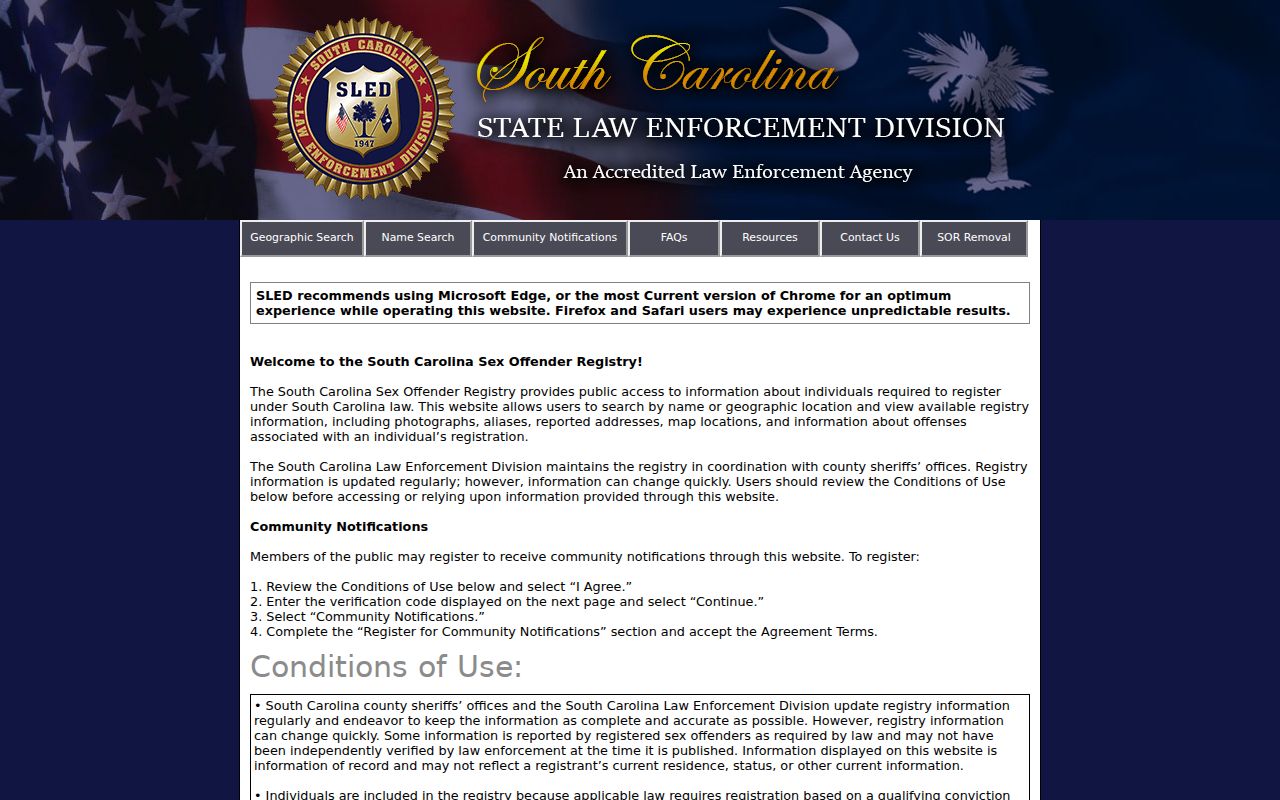
This interface gives Saluda County readers a place-based route without centering the search on a private individual. Search results should still be opened and checked because a map marker alone cannot show the full profile or explain the underlying offense.
Searching the South Carolina Sex Offender Registry Tool
SLED places conditions of use and a security check before public SORT results. Start with the search method that fits the question, then use the least amount of information needed to avoid an overly narrow miss. Name and place searches are separate workflows. The name form is direct when a full or partial name is known. The geographic form is better for a Saluda County neighborhood or address question. Community Notifications is another distinct option for updates near locations a user supplies.
- Open SORT, read the conditions, accept them, and complete the captcha or security code.
- Choose Name Search or Geographic Search. Enter the name, or use an address with Saluda County and a suitable radius.
- Review the result list and map. Compare more than one fact before selecting a possible match.
- Open the profile and read the photos, aliases, address, offense details, tier, jurisdiction, and status together.
| Field Label | Type | Required | Notes |
|---|---|---|---|
| Last Name | Text | Name path | Primary name control; exact or partial behavior is not promised. |
| First Name | Text | Name path | Use with the last name to narrow a possible match. |
| Address, City, ZIP | Text/select | Geographic path | Centers or narrows a location-based search. |
| County | Select | Optional | Select Saluda for a county filter. |
| Radius and Map | Select/map | Optional | Supports proximity results around the entered location. |
| Captcha | Security code | Yes | Appears after the conditions are accepted. |
Saluda County Registry and CATCH
SLED CATCH and SORT are both official state tools, but they do not search the same records. CATCH returns a South Carolina name-based criminal-history product built from fingerprint-supported submissions. Its terms expressly exclude sex offender registry information. A CATCH result therefore cannot replace a Saluda County registry check. The reverse is also true. A SORT profile is a statutory registry publication, not a full court docket, booking file, wanted-person list, or statewide rap sheet.
That split matters when the first search seems empty. An absence in CATCH says nothing about SORT. An absence in SORT does not prove that a person has no criminal case. Use the official product tied to the question. For registry status, use SORT. For the charge history and disposition behind a case, the Saluda County criminal court case records may supply court context that the registry profile does not.
Note: A registry result and a criminal-history report are separate records with different legal purposes, fields, and update paths.
What a Registry Profile Shows
A SORT profile gathers several public identity and registration fields into one view. SLED says a profile can display multiple photographs taken over time, aliases, a mapped residence, and all sexually related conviction offenses. It may also show physical traits, registration jurisdiction and status, reported address, offense jurisdiction and date, scars or tattoos, vehicles, and work or school information when South Carolina law makes those fields public. The exact mix can differ by record, so a blank field should not be filled by assumption.
| Name & Aliases | Displayed identity and other reported names that can help distinguish similar records. |
|---|---|
| Photo & Physical Description | One or more photographs over time plus public descriptors and identifying marks where shown. |
| Registered Address | Reported residence information and a map used for geographic context. |
| Offense Details | Sexually related conviction offenses with available jurisdiction and date information. |
| Level / Tier | The South Carolina tier tied to statutory registration and possible termination rules. |
| Registration Status | The status and registration jurisdiction shown in the current public entry. |
Saluda County Name Profile Review
A name result needs a deliberate match check. Begin broadly enough to catch an alias or name variation, then open the likely profile. Compare the current and older photos with the listed physical description. Read all aliases. Next, place the address and map in context, and review the offense jurisdiction and conviction details. A shared name, approximate age, or nearby marker is not enough by itself.
The official SORT name-search interface is the direct route when the name is known.
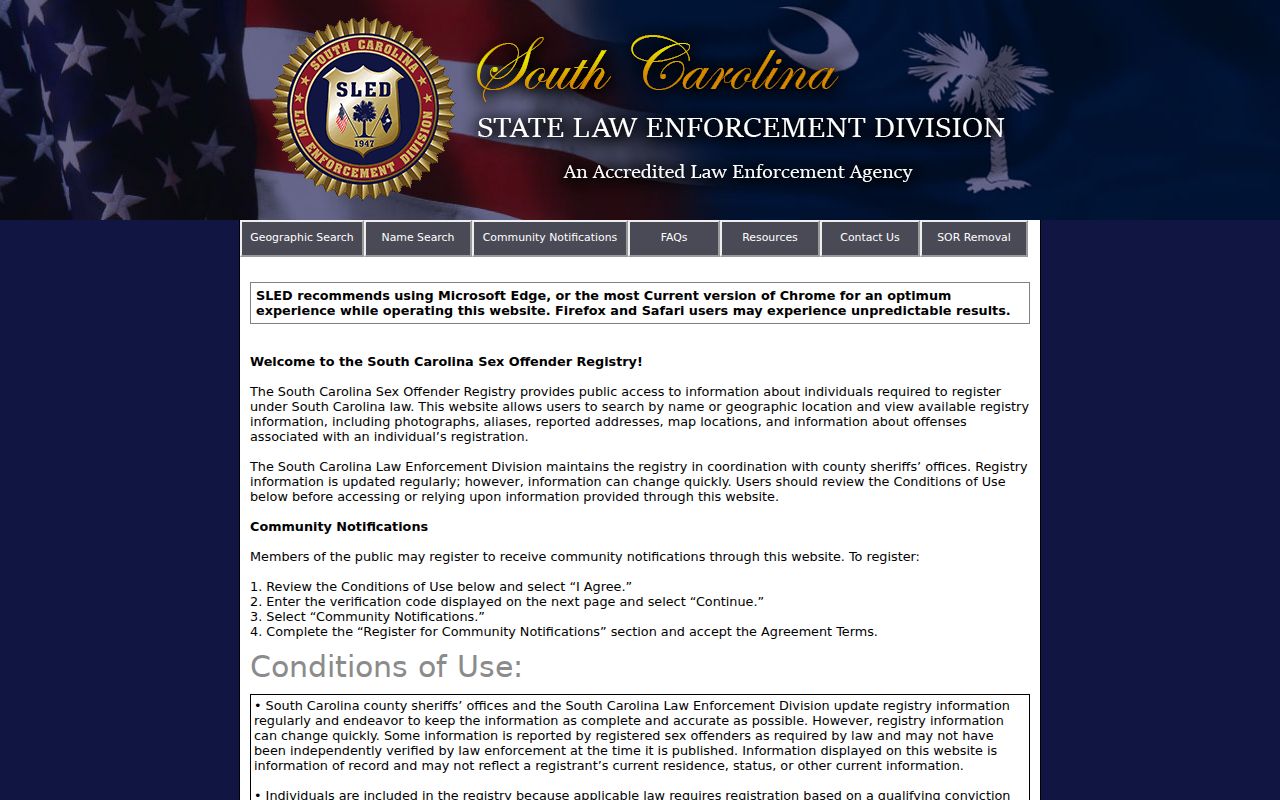
The form keeps the first step simple, but the real identity work happens in the full profile. If a Saluda County entry appears wrong, use the SLED Sex Offender Registry Unit contact rather than drawing a conclusion from the result list alone. The unit accepts questions at 803-896-2601, by fax at 803-896-2311, or by email at sor@sled.sc.gov.
Registration Requirements and Levels in South Carolina
South Carolina organizes registry termination paths around tiers. The dates below are the earliest mechanisms SLED describes, not automatic end dates. A person must keep registering while an application or motion is pending. Tier I and Tier II adult requests generally follow a paper process through SLED. Tier III adult relief follows a motion in General Sessions instead of an administrative SLED request. Juvenile and out-of-state matters have separate statutory rules and may involve Family Court or General Sessions.
| State Tier | Earliest Mechanism | Channel |
|---|---|---|
| Tier I adult | After 15 qualifying years | Paper application to SLED |
| Tier II adult | After 25 qualifying years | Paper application to SLED |
| Tier III adult | After 30 qualifying years | Motion in General Sessions |
| Qualifying juvenile or out-of-state | Special statutory rules | SLED guidance and the proper court |
Saluda County Registry Removal Paths
The Tier I and Tier II process is paper based. SLED requires its application, two recent FD-258 fingerprint sets, a $250 nonrefundable cashier's check or money order, sentencing and disposition papers, and proof that treatment was completed. The agency describes a 120-day review after it receives a complete submission and gives notice to the original prosecutor. A denial may generally be followed by another SLED request no sooner than five years later. Judicial review goes to the proper court, not back to SLED as an appeal.
Tier III is the key exception. After the qualifying period, the request goes by motion to General Sessions rather than through SLED's administrative application. In Saluda County, that distinction points to the Court of General Sessions in the Eleventh Judicial Circuit. Acts signed on May 22, 2025 also added Tier I offenses and changed Tier I and juvenile removal standards, so the current SLED instructions and governing statute should be checked before papers are prepared.
Lawful Use and Community Notification
SORT supports awareness and safety planning. Its Community Notifications feature lets a user register for updates around supplied locations. People who registered in the former system must register again in SORT. The local contact is the Saluda County Sheriff's Office at 100 Law Enforcement Drive, Saluda, SC 29138, 864-445-2112. Current registry appointment hours and fees are not published, so callers should confirm the process before going to the office.
Registry information must be used with care. SLED warns that it may change before local verification. The public record supports informed choices and lawful community awareness, but it does not authorize threats, injury, harassment, or vigilantism. Concerns about a local entry or compliance issue belong with the sheriff or SLED, while an immediate threat belongs with emergency services.
Criminal misuse carries added punishment. Under S.C. Code §23-3-510, using registry information to commit another crime can add up to $1,000 and six months for an underlying misdemeanor, or up to five years for an underlying felony.
Saluda County Cross-State Registry Checks
A Saluda County address can be only one part of a wider location question. The National Sex Offender Public Website, operated by the U.S. Department of Justice, supplies the official cross-state search layer. It is useful when a person may have moved, when a trip crosses state lines, or when the relevant address is outside South Carolina. NSOPW supplements SORT rather than replacing it.
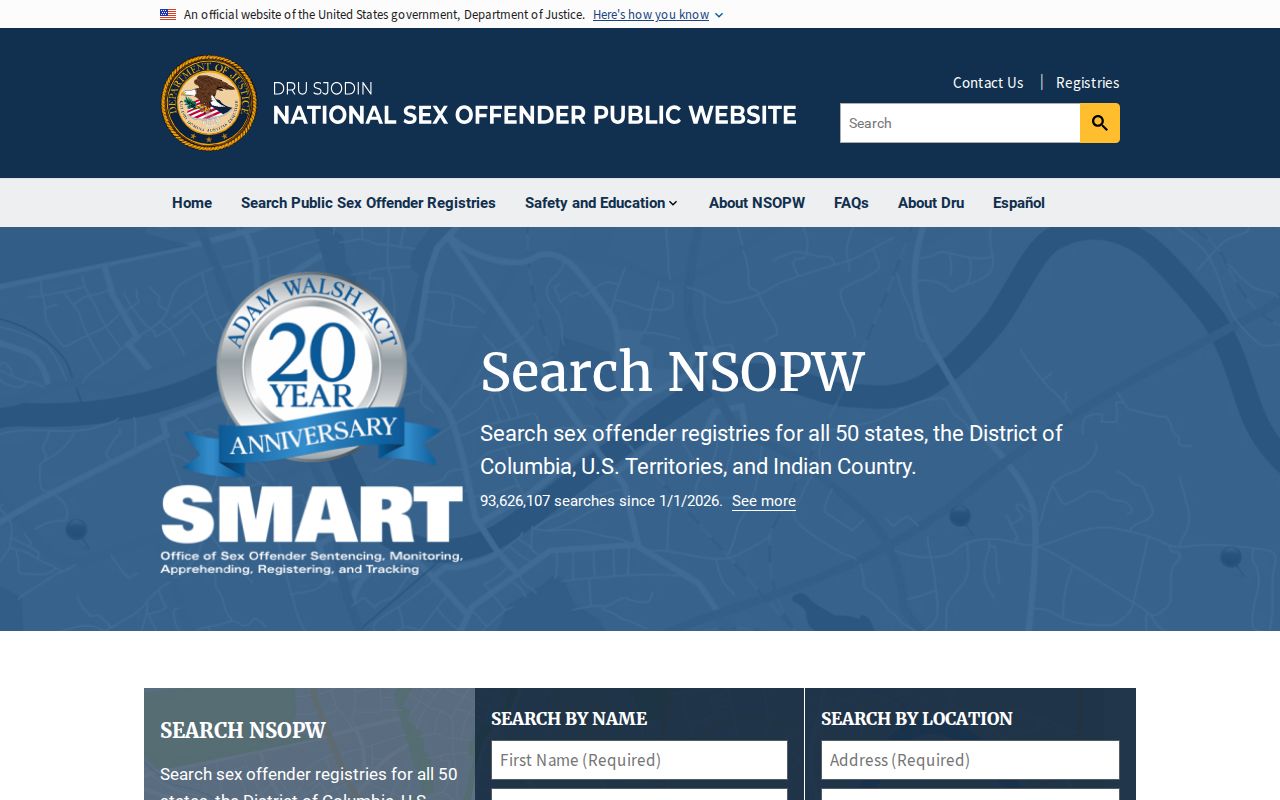
The national interface broadens geographic reach, while SORT remains the most direct source for South Carolina profile details and Saluda County filtering. When the two views seem to differ, note the profile jurisdiction and date, then ask the listed registry agency to clarify. Do not infer compliance, removal eligibility, or current danger from a single search screen.